Monday, November 8, 2010

Chapter 9


c2008 B. Greene


Saving our Land


I told Sam he could fuck the war,
and got a busted jaw
for sayin “fuck the law”
If you wonder why I’m mad, check the record
What's a nigga gotta do to get respected

Sometimes I think I’m getting tested, if I don’t say “yes”
a nigga's quick to get arrested

-Tupac Shakur

April, 1970

My relationship with the South has always been bittersweet. Like my love affair with the blues, I’m attracted to the cultural intensity and authenticity, but repulsed by the history of pain and hardship. Houston, Texas came to hold a similar position in my mind. Houston longs to be linked with the Southwest, and all that connotes, but remains, geographically and historically in the South. That means that all things Southern are all things Houston. It means, too, that parts of Texas continue fighting the Civil War, and parts are still resisting postmodern social theory. Like the rest of Texas, Houston is not without complexity. Politically progressive groups from mainstream Democrats to more radical elements have always struggled to maintain a foothold. The power structure of Houston, including city government, law enforcement, and social services was unabashedly protective of the status quo. Given this reality, I was never without fear and doubt about my safety. The work we were doing, like our idealism and politics, ran counter to the majority view. Despite the protection of the U.S. government, we were targets, and needed to remember that always.
Occasionally, hints of our vulnerability came in the form of phone calls at 3 o’clock or 4 o’clock in the morning. It seems that our local KKK chapter was encouraged to give us these “wake-up “ calls in the form of mild threats.
“Y’all need to reconsider what yur doin’ here and get the hell out.” Our niggers are happy without you messin’ in their bizness. If I were you, I’d go back where you came from and don’t send any more long haired nigger-lovin commies where they’re not welcome.”
Click.
Nobody took those threats to heart until a recently updated VISTA phone tree list, with street addresses, fell into the wrong hands. An anonymous tipster informed our supervisor that the Klan definitely had the new list. My concern went through the roof because I had recently moved. When Julie, my horse- owning partner, found an inexpensive 2-bedroom garage apartment in the North side barrio, she convinced Kim and me to share the cost.
“It’s a great little garage apartment. There’s a bedroom you guys can have and a dining room that I can use for a room. Besides, it’s only $25.00 a month rent. Think of the money you can save.”
“Are you sure about the rent?”
“Yeah, Mrs. Martinez, who owns the house in front is very partial to VISTAs. She has a history of renting to the project. She likes to think that by keeping the rent low she’s making her little contribution to the project. Can I tell her you guys want the place with me?”
One look at the apartment and the deal went down. It was clean, had beautifully kept hardwood floors, seemed quite roomy, and truly did rent for $25.00 monthly. My portion of the rent was going to be $12.50. The stolen list had this new Cochran Street address; it was clearly a recent addition. The local Klan chapter probably knew my new address better than I did.
I felt targeted. I worried that Mrs. Martinez might be too. But I knew that this type of harassment came with the territory. Certainly it was no more than many before me had felt. Sometimes, on steamy nights, unable to sleep, I’d think about the fire bombings of Black churches all over the South and the constant threats against all who marched, spoke out, or ultimately gave their lives for what they knew to be right. I’d think about the people who were lynched for exercising the right to vote and soon the more notorious cases like Emmet Till and Medgar Evers would drift through my mind. One evening, after realizing that there was absolutely nothing I could do if someone decided my presence warranted removal I thought deeply about my own political evolution. Like all kids growing up in the 50s and 60s, the black and white TV images of the Civil Rights Movement, fire hoses turned on demonstrators, dogs tearing clothing, God-fearing, Bible toting women spewing verbal venom at 6 year old school children, were seared in my brain. But that particular night, with the realization that my name had found its way into the hands of Klansmen, my fear dissipated when I recalled the moment I knew I wanted to be an agent for change. My 11th grade U.S. History teacher, Mr. Ellcot, had assigned a term paper. Using historical texts and current periodicals, I wrote about the struggle for voting rights in the South. In one Newsweek article I came upon some literacy test questions used to deny Blacks the right to vote in Alabama. There, in my high school library, with my American Literature anthology and my history text, The Pageant of American History, weighing me down, I read the question: “How many bubbles are there in a bar of soap.” For me, the meaning of democracy changed forever. This new fear was nothing. Looking back now I realize feeling threatened for ethical beliefs is something that never leaves. Like hunger, once endured, it becomes a permanent part of the psyche and shapes all that follows.

The List. (Kim’s added notation: the address of her friend Clarence. Fortunately the KKK didn’t get this copy!)
Soon afterward, the entire project learned that there was a direct link between the Houston Police Department and the local Ku Klux Klan chapter. That explained our contact information forwarded to the Klan. It followed that the Mayor of Houston at that time, Louie Welch, was a passive overseer of all this collusion. If Welch was passive, Police Chief Herman Short was on the front lines. Short, whose 10-year reign as Houston’s top cop from 1964-74, left no doubt. His overtly racist attitudes and policies shaped the tone of the entire department. In fact, the KKK openly recruited in the police locker room. When a local newspaper fortuitously captured a picture of a Houston Klansman dressed in white robes getting out of a Houston police car, police chief Herman Short was quoted in the Houston Chronicle saying, “I see no contradiction between being in the Ku Klux Klan and being a Houston police officer.” The department knew that and acted accordingly.

What else can I say? Photo: Ron Laytner, Edit Int.

This alleged connection between a hate group and a police department invites skepticism. None existed on my part. Further evidence for the link came when I attended a demonstration against police brutality one Saturday afternoon. On advice from Lee Canales, one of the VISTA Supervisors in Houston, we remained on the sidelines throughout most of the march. With local media coverage, the demonstration of solidarity went off without a hitch. Some of us made our way into the march itself carrying signs, chanting “Stop police brutality now” or “Hey Hey, Ho Ho,” Herman Short has got to go.” A few VISTA lawyers present in the crowd of onlookers noted down the make, model, and license plates of cars that seemed to be following the proceedings with a critical eye. Most of their drivers were clicking cameras in our faces. The cars had Louisiana plates. We saw those same cars, usually white with blackwall tires, a few weeks later with plainclothes policemen and Texas plates. The lines were drawn. Anybody who had ideas that ran counter to the conventional wisdom about “social change” would hear from the white power structure. Cops or Klan, that’s how it was done.

I snatched this off a telephone pole on South Main St.

The Houston police were notorious for their methodology. In their desire to protect and serve, people often came up missing. We heard all about the questioning of suspects down on Buffalo Bayou.* Thus far our only skirmishes with the police took the form of patronizing warnings to keep out of poor communities or an occasional case of flat out harassment as in Kim’s arrest and “trial.”
And then there was the case of Lee Otis Johnson a former SNCC member turned Black Panther. After a violent confrontation on the Texas Southern campus in 1967, in which one Houston police officer was killed and almost 500 students arrested, Johnson became the target of the Houston Police Department. Students were beginning to listen to his speeches carefully. If SNCC was non-violent, the Black Panther Party was clear about adopting Malcolm X’s strategy, “By any means necessary.” The story of Lee Otis Johnson’s arrest was well known throughout Texas and frequently mentioned during our orientation to Houston. At a party, a Black, Houston undercover officer passed Johnson one joint. For the possession of a single marijuana cigarette, he was given a prison term of 30 years.
That was Texas. Lee Otis Johnson’s story was constantly with us when dealing with the police. We saw the same tactic used with Kim’s friend Clarence. The relationship between the District Attorney and law enforcement made this sort of thing a common occurrence. If any explanation came down to the word of a cop against the word of a suspect, or even a witness, case closed.

May, 1970
We really didn’t have much planned for the weekend. When Miles Simmons, the head VISTA supervisor called, late Thursday I told him so.
“Bruce, I need you to do something this weekend. Listen carefully, I can only tell you so much, and you have to do exactly what I say.” Now I was intrigued.
“Can I take Kim along?” I asked.
“Yes, you can, actually I was hoping she’d go with you, but if she doesn’t, I need you to do this.”
“OK, what is it that’s so mysterious and pressing?”
Miles proceeded to give me a set of specific instructions. He wanted me to take my GSA car and drive out to a lake about an hour out of town. There I would meet him and receive some camping equipment, food for two days, and a few dollars. He advised us to take a book or radio because we’d be at the lake for 48 hours straight. Finally, Miles explained that we’d be sharing a campsite with a man and his young son. On Sunday afternoon, we were to return them to the Project headquarters.
Kim was cool with the plan, so we threw some clothes together, found an old portable radio, grabbed a few books and magazines and headed for the lake. The April weather was blustery. Swimming was out of the question. We found the lake and designated campground and met up with Miles and his “friends” easily. He introduced us to Enrique and his 8 year-old son Luis. They spoke very little English, but my limited Spanish served me well. Before Miles left, he reminded me about the time and place for our return Sunday. He and I unloaded some food, tents and sleeping bags, and firewood from his car. I was overjoyed when Enrique produced a fishing pole and I remembered seeing a bait shop within walking distance from our site. Miles gave me his usual warm smile and whispered, “Thanks, see you in a couple of days.”
Because of the wind, the campground was fairly deserted. The first evening I fished with Luis and Enrique for a bit. They retired early. Kim and I began to speculate about the nature of this big hush-hush assignment. Because a child was involved, our thoughts centered on Luis. Perhaps he was being protected from something. Saturday dragged along. A cold wind whisked the lake to white caps. Fishing became difficult, so we all settled for a brief hike along the shore. The dry, cracked ground was an ugly gray-brown. I was beginning to think we were becoming increasingly vulnerable in this hostile spot. Toward the end of day my thoughts focused on why we were sent out of town and who Enrique might be. Kim and I began to speculate. He obviously was in some kind of danger, yet he didn’t seem like many of the Chicano leaders we knew. They were bi-lingual, verbally engaging, and defiantly proud. Enrique seemed almost to cower in our presence. Perhaps it was the language barrier, or his own timidity or embarrassment at having to have caregivers accompany him on an outing with his son. He never initiated much conversation and seemed as anxious as we to return on Sunday afternoon.
Late the next day, with Enrique and Luis safely delivered back to their family; Miles called me and filled in the blanks.
“Did you notice the scars on his face,” he asked. “I guess so, I replied, but I thought perhaps they were just pock marks or the remnants of teenage acne,” I said.
Miles told me they were more the results of plastic surgery. He proceeded to explain that Enrique had been the recipient of a beating by the Houston police. Rather than throwing him into Buffalo Bayou, as was often the custom, he was discovered and sent to Jeff Davis Hospital. Here’s where the story went from interesting to extremely interesting. Apparently, among the bones broken in Enrique’s face was one that rarely gets broken. Miles reminded me that he was not privy to any medical facts but added that a young intern in the ER who treated Enrique was so fascinated by this fact that he took an inordinate amount of photographs. That documentation was to become part of a lawsuit against the Houston Police Department. Enrique’s lawyers were afraid that something would happen to him before the case went to trial. To insure he survived, they were taking turns moving him around until his deposition was completed. We merely played a small role in insuring that justice would be done.
I’ve always been relieved that I knew very little during that weekend. I can only imagine how often I’d have looked over my shoulder on that camping trip. In an ironic twist, VISTAS were experiencing much the same fear and distrust as those whom they endeavored to help. I don’t think we ever thought just by physically putting ourselves in these communities we could immediately effect change. It’s difficult to say now, as it was then, just what we thought we could accomplish. What was clear, however, was that this “Other America” did exist, and anything we might be able to bring to the table would help. Exposing the glaring inequities of the world’s richest democracy was definitely heady stuff as well. Yet, contradictions and paradoxes lurked behind every other thought. As one Oklahoma pastor asked us the last week of training, “Could you lie for the same reasons you’d tell the truth?” Looking back, I see his point was not really a question; he was letting us know what we’d be up against at every turn. Like the cops with duel license plates, and the civic officials, and in some cases, the very people we were trying to help, the message was clear. Any attempt to mess with the status quo would have consequences.
By November, the University of Thought for high school students was in its second semester. Patterned after a growing “new schools” movement, the idea captured the imagination of teens and young educators. The VISTA sponsored Free University sought to offer Houston’s high school students classes in subjects they wanted. Many local teachers volunteered their time and resources for the pilot program. Rice University offered us classrooms and evening hours. Everything from language classes to art history to photography and writing workshops made the initial schedule. The class that received the most sign-ups was Rock and Blues Analysis. When the organizers of the program elicited my help, I volunteered to teach the class. I was sure I could do justice to the subject. I knew I wanted to go into teaching after my battle with the draft was over, and I felt qualified given that my undergraduate history thesis was in African-American studies. I’d even done a major research project on the blues. I ached to teach the class.
One of Saul Alinsky’s key tenets of political organizing was that the middle class makes a better target than the underclass. That’s where the power is, he reasoned. I’d been to enough political meetings in L.A. with Black Panthers and other less aligned radicals telling Whites to organize their own communities before building agendas for underrepresented Black and Brown people. The content of any Rock and Blues Analysis course would contain the foundation for a larger ethnic studies program. In exploring the origin of African-American music, White middle class kids would be exposed to a rich curriculum detailing the impact of African roots, slavery, and the Civil Rights Movement on the music they loved. In the 60s the blues enjoyed an enormous revival that resurrected the careers of ageing legends and gave recording contracts to young Whites retooling old songs and calling themselves blues bands. Janis Joplin and Big Mama Thornton enjoyed simultaneous success. Muddy Waters and Mick Jagger, Howlin’ Wolf and Van Morrison, Buddy Guy, Junior Wells, Canned Heat, J. Geils Band--all prospered. It was nothing short of a golden age of blues. Rock and Blues Analysis was the vehicle to bring a comprehensive approach to ethnic studies to students whose libraries and social science curriculum were “whitewashed.”
When the University of Thought kicked in, immediate success followed. The local press showed up to the first meeting of Rock and Blues Analysis and with a feature story in the Houston Post, enrollment swelled. Once a week, for the six-week duration of the course, I made the trip across town from the suffocating heat of the 3rd Ward, to the air-conditioned oasis of red brick and ivy at Rice University. The students were bright and engaged. We traced the African retention of sound, lyric, and beat to three specific styles of blues music. Using recordings, excerpted texts, my own harmonicas, and my students’ talent and enthusiasm, the course ended a resounding success. Looking back now, with 30 years of teaching experience under my belt, I can see how I might have done some things differently. Yet, given my limited resources and experience, I’m pleased with the job I did. Though I did not know it at the time, I have come to believe that we teach best what we love.

Thursday, November 4, 2010

Chapter 8


Chapter 8
cB. Greene

Selective Service

I'm just a typical American boy from a typical American town
I believe in God and Senator Dodd and keeping old Castro down
And when it came my time to serve I knew better dead than red
But when I got to my old draft board, buddy, this is what I said
Sarge, I'm only eighteen, I got a ruptured spleen
And I always carry a purse
I got eyes like a bat, my feet are flat, and my asthma's
getting worse
O think of my career, my sweetheart dear, and my poor old
invalid aunt

Besides, I ain't no fool, I'm a goin' to school, and I'm
working in a defense plant


Draft Dodger Rag
Phil Ochs


...You fasten the triggers
For the others to fire
Then you set back and watch
When the death count gets higher
You hide in your mansion
As young people's blood
Flows out of their bodies
And is buried in the mud

How much do I know
To talk out of turn
You might say that I'm young
You might say I'm unlearned
But there's one thing I know
Though I'm younger than you
Even Jesus would never
Forgive what you do


Masters of War
Bob Dylan


There was never a day I didn’t think about the draft. It hovered over my head like a red white and blue guillotine. The growing dissent and unpopularity of the war in Vietnam made the ongoing struggle bearable, but for most of us, a personal confrontation with our very own draft board was always looming on the horizon. Most cities had competent draft counselors. Informative, accurate, and affordable books on the subject were easy to come by. No amount, however, of imaginary rehearsals, daydreams, or nightmares would ever be enough for the day of reckoning sure to come.
For my generation, Vietnam became the defining issue. The war divided friends and families, traumatized our moral emotions, and forced us to re-examine our understanding of U.S. history. The conclusions I was beginning to draw from studying U.S. foreign policy were reinforced in nightly newscasts. Every time I saw film of bombing runs, napalm being dropped, and villages and Vietnamese people on fire, I imagined myself an eyewitness. All the patriotic parades, the brassy marches, and uniformed heroes from my childhood seemed hollow. I was beginning to realize how manipulated and distorted the media, the history texts, and the true believers could be.
For me, the conflict centered on the ease with which most people I knew and respected could accept the brutality of war. Why didn’t they see what I saw? Why didn’t the screaming, naked children, with clothing burning or defolients used to pollute and annihilate rivers and countryside, food supply and entire villages of this ancient culture have the same impact? Who needed atomic fallout when the Dow Chemical Company could produce weapons that would have the same effects for less money? The mindless arguments regurgitated to rationalize what we all knew were the most infuriating.
“There will always be poverty and war. It’s just human nature.”
“If my country needs me I’m there. We shouldn’t question our leaders, after all they were elected by the people and this is a democracy.”
I began to feel alienated from all but my own generation. Talking to neighbors at a summer gathering or my friend’s parents proved to be too confrontational. Best to avoid them unless they would listen to another view. Vietnam soon became only the tip of an iceberg so enormous and so submerged that any simple conversation about the conduct of the war, the troops or the president could result in disparaging remarks about everything from Disneyland to Little League, to U.S. Imperialism during the Spanish American War. I braced for my community to perceive me as a radical, a communist sympathizer, a coward, and an impressionable fool. Even in the face of astonishing statements made by respected U.S. military figures, many Americans remained loyal and sacrificed critical thinking for blind faith. In March of 1968, American journalist Peter Arnett interviewed an American Major after the destruction of the village of Ben Tre. The officer’s response, serves to encapsulate all the irrational, mind-numbing, convoluted outrage that many of us felt. He said, “In order to save the village, we had to destroy it.”
Hidden, of course, were the psychological basket cases, the desensitized, shell shocked, and sociopathic, who, if they were fortunate to free themselves from an inept Veterans Administration, were released into star-spangled communities to either re-live their traumas or recreate them. For a person who had always enjoyed the support of family, teachers, Boy Scout troop masters, and other authority figures, I was now the rebel. I was the one who defied his country, his government, his elders, and certainly, in their view his God.
Television changed all that. Much as it did with the Civil Rights Movement, the war went from the jungle into our living rooms. It arrived in color, with the sound of bombed out villages, the cries of bleeding army privates, and the rolling thunder of exploding napalm enveloping the terrain and bodies of Vietnamese in the liquid fire that most often burned and maimed. There was less instant death from napalm; it rolled over and on to homes and their occupants like molten Vaseline. Human beings were doing this to other human beings. No stirring speech, military march or crisp dress uniform would ever camouflage the sickening feeling of combat video TV newscasts and documentary films presented daily.
On December 1, 1969 all the VISTAS from the entire Houston area jammed into a newly opened Project House to watch the televised draft lottery. The Project House, formerly a convent, served as a safe haven for VISTAS between living situations, new people to the area, and an increasing number of VISTA lawyers sent to the region. We watched with grim faces and hostile humor as numbers emerged, were plugged into birthdays, and our fate determined on national television. Birth dates turned into death dates. From 1 to 365, each day of the year turned into a paroxysm of grief or relief.
Alun Richards, a VISTA originally from Wales, got number 2. I had forgotten that even non-U.S. citizens were eligible for the draft too. His usual toothy smile evaporated. Alun returned to Wales a week later. His VISTA girlfriend, Julie Shaw, cried for days. She then moved into a small vacant space at 1506 Rosewood for a short while just to be around people. With each new number called my VISTA peers breathed a bit easier. The guys with numbers over 200 tried to suppress their joy and relief. My number was 147, a decent draw for most guys. But I knew immediately it wasn’t high enough. My draft board, the second largest in the country, would easily get to 250 at least. I knew too, that I was in for a battle. But this was one fight I was willing to engage. The way I figured it, I needed to confront the system head on. Anything less would be inauthentic. I was an admirer of David Harris, the former Stanford student body president who, along with his wife at the time, Joan Baez, asked young people my age to think critically, if not differently about the entire military paradigm and its tactic of “channeling” men between the ages of 18 -26 to fight and die for a foreign policy that was deceptive and inept at worse, questionable and ineffective at best. Sleep didn’t come that night. Some of the guys who knew they would not be called were in a celebratory mood. But this was not making the basketball team, or the dreaded “being cut” in Little League. This was answering your government’s call, protecting democracy, taking a human life. No party followed. Sympathies exchanged, we filed back to our communities wondering how it would all play out.
Donovan’s version of Buffy St. Marie's "Universal Soldier" played in my mind like a broken music box. I knew all the verses, but kept hearing just four:
He’s five foot-two and he’s six feet four
He fights with missiles and with spears,
He’s all if thirty-one, and he’s only seventeen,
Been a soldier for a thousand years,

He’s a Catholic, a Hindu, an Atheist, a Jain,
A Buddhist and a Baptist and a Jew,
And he knows he shouldn’t kill,
And he knows he always will,
Kill you for me my friend, and me for you.
And he’s fighting for Canada, he’s fighting for France
He’s fighting for the USA
And he’s fighting for the Russians
And he’s fighting for Japan,
And he thinks we’ll put an end to war this way.

And he’s fighting for Democracy, he’s fighting for the Reds,
He says it’s for the peace of all,
He’s the one who must decide, who’s to live and who’s to die,
And he never sees the writing on the wall.

He’s the Universal Soldier and he really is to blame,
His orders come from far away no more,
They come from here and there and you and me,
And brothers can’t you see,
This is not the way we put the end to war.


My orders were beginning to” come from far away no more.” If thinking deeply could be measured, I was in the Earth’s core. The last line of that song became an endless loop: “This is not the way we put an end to war.” In my restlessness I conjured up the number 147. How fitting. Fours and Sevens have always been a big deal for me. Since my birthday is 4/7/1947 and my time of birth is 7:47 pm the synchronicity was not lost. If only a three had appeared. Number 347 would have made me safe; 147 only bought a few more months before the inevitable. Deeper into that night, the song became a sound track for a replay of my meeting David Harris the previous year. Harris, the former Stanford Student Body President was making headlines for his vehement war resistor stance. Marrying singer Joan Baez, already targeted by Right Wing pundits and politicos as a “Commie,” made the bulls eye on his back just a tad bigger.
On a warm spring morning in my senior year David Harris visited the UCLA campus and spoke to a modest crowd of mostly draft age students. Accompanied by Baez, who said very little but never left his side, he invited any interested students to reconvene after the official presentation concluded. About 10 of us ended up under a nearby tree. There, under the shade of the willing elm, Harris answered questions about the quirks and inconsistencies of local draft boards. His eyes were deep and clear, his resolve as genuine as gold. Harris’s voice was soft yet firm. Empowering, yes; but an air of sadness always surrounded David Harris. It wasn’t until I received a letter from him a few months later that I smiled. I’d written him asking about how his own case was going and a planned war resisters initiative scheduled for early the next year. With the lottery slated to kick in, I wanted to learn everything I could about my alternatives and the burgeoning resistance. Harris outlined the details of his case for me and noted he didn’t expect to win. Like most draft resistors, he would not be tried on the sincerity of his beliefs, but only on the fact that he refused induction. On the back flap of the green yellow and brown flowered envelope he wrote, “Please excuse the stationery, it’s my wife’s.”

David Harris and Joan Baez

My first draft board appearance came in early fall. It had taken six months to get the appearance and most of the counselors I’d spoken to felt my board would not grant the occupational deferment for VISTA.
“It doesn’t matter what some guy’s board in Ohio says, it’s all random,” my main counselor said. “Your board is in the East Valley and they have huge quotas to fill; don’t count on it.” That was the bad news; the good news was that asking for the occupational deferment would buy time. Then, when that deferment was denied, I could file for conscientious objector status. An appearance for that request would take another six months to get.
Besides, the counselors all agree, that’s the appearance that will determine the course of your life. I needed to get over the fact that the system was so unfair, so inconsistent. Sure, some of the male VISTAS received occupational deferments for their service but my board had never granted that status to anyone. Some guys I knew made appearances and simply told their board members that they did not want to kill any body and were immediately reclassified. My board reputedly relished asking difficult questions. I knew I was in for a battle when 147 finally came up. The only unknown was the time frame for this drama to play out.
In all, I made two appearances before Local Board #82 The first one in October of 1969 went quickly. They asked me a few questions about my work in VISTA and simply concluded that while it was an honorable sentiment to serve the poor, it certainly wasn’t worthy of a wartime deferment. In their eyes, there was only one war going on. The following month I was reclassified 1-A; when my number came up, I’d receive a notice for physical exam. One option remained, declaring myself a conscientious objector and asking for a personal appearance to state my case and defend my beliefs. The way the law was written, that belief had to be based on a concept of God. I saw no problem with that because I regarded human beings created in the image of God. If human life was sacred, and humans were God, how could I kill God? You want God, I thought, I’ll give you God. I began work on my official statement the day my new draft card arrived.

During this period I went to visit VISTA Arny Reichler. Aside from being a loyal friend, Arne was an ally in my struggle with the draft. He also made me laugh. With his thick wire rimmed glasses constantly sliding down his nose, Arny loved talking about his draft board. He’d take large gulps from his coffee mug, swirl his thinning hair out of his eyes and begin his monologue.
“I’ve really figured out how to drive my board nuts. The law says they gotta put everything you send ‘em in your file. So I send ‘em telephone books and old encyclopedias.”
Arny also sent his draft board a new poem each week. He would carefully number each poem because he sensed that after a while everything would just automatically get dumped in his file. Arny had no intention of sending a #17 poem. He knew that by the time he had sent in over 100 poems he could easily make the case that the board lost #17. This procedural error might be just the ticket to keep him away from Vietnam. Like all of us, Arny knew a few other methods to buy time from the military, but he preferred to do it his way. But sharing the folk culture of draft resistors was something we did if only to keep options for others open. He’d tell me about one guy who stuck crunchy peanut butter up his ass so he could reach down during his physical in front of the army doctors and transfer the contents to his mouth. If it worked in one part of the country, it just might do the trick in another. I’d tell him that someone told me to soak a cigarette in iodine overnight and then let it dry out. Supposedly if you smoked it and slowly inhaled the smoke, your lungs would be temporarily spotted and you’d be classified 4-F. (Physically unfit)
Because the draft was a constant concern of male VISTAS, Arny and I tried to disseminate as much information as possible. We knew that the best draft counseling came from the east or west coast so we did out best to pass along anything we knew. One VISTA, Hugh Grady, from Savannah, Georgia, had a most uncommon struggle with his board. Former SDS members, he and his wife Sue had joined VISTA upon college graduation together. Hugh was straightforward with his board and told them that he had belonged to an organization that advocated overthrow of the government. He knew that there was a provision in the draft law, added during the Cold War’s inception that might disqualify him for holding that belief. The board didn’t go for it. After a lengthy battle, Hugh invited us all over for a get together where he announced that he was going to go in rather than flee to Canada. Standing in front of a wall of posters with images of Chairman Mao, Che Guevara, and Malcolm X, he spoke. “I’ve decided to organize from within,” he solemnly announced. “I think I can do more to end this war that way.” The Vietnam Veterans Against the War was just beginning to form and we all had heard stories about fragging (enlisted men killing their officers) in Vietnam. It seemed a brave and logical thing for him to do. When Hugh returned home the evening of his scheduled deployment we were dumfounded. Just before his final physical, he told a sergeant he was gay and then did his best to act the stereotype. “I was just trying to fuck with their heads, “he told us grinning like a mule eating saw brier. “See, in Georgia, I guess they’re more afraid of a gay man than one who believes in overthrowing the government.”
The word on the street about my board was very different. If anyone tried to claim they were gay, the Sergeant in charge would immediately bark, “Good, then you’ll love the army.” Just who they were was uncertain, but I was expecting them to be extremely testy. I knew my personal references needed to be exceptional if I was to have any chance of believability. I lined up what I considered to be three of the best. Miles Simmons was a minister. As one of my VISTA supervisors he was qualified to comment on my spiritual side. Lee Canales, my other supervisor was a veteran. A former MP in charge of guarding top-secret materials he was like so many Latinos I met in Texas in that he had a different view of the military. For Latino men who grew up in the barrio, the military represented a way out. It was three meals a day, it was a college education, and it was travel. Canales respected my position, and I his. Handing me his letter of reference to be sent in with my statement of conscientious objection, Lee could hardly contain himself.
“Wait till you read this letter Bruce, I think I’ve given them something to think about.”
“What do you mean?”
“Well there’s a line in there where after I tell them about my MP background, I say that you are about the last person I would want next to me with a gun in a combat situation!”
“Hey, that’s good,” I said, trying not to have my male ego shattered. Would I be seen as weak because I refused to take a government issue M-14 and kill people? A momentary thought. Nothing more. Certainly my Eagle Scout rank would validate my ability to survive in the wilderness. Inside, I was thinking, it’s very logical, very honest, I certainly would hesitate to kill; maybe one of those guys will have some doubt swimming upstream inside his head? I just hoped they wouldn’t ask to see my Eagle Scout badge. Shortly after the 1968 Democratic Convention I had removed the Sterling silver eagle from the medal and replaced it with a peace symbol. Hanging underneath the red, white, and blue ribbons, it seemed more functional that way.
My third letter came from my father. He was more than happy to support my beliefs and in his comments traced their origin by detailing the kind of child I was, what values my family had imbued in me and his estimation of the depth of my sincerity. I was tickled that he mentioned I achieved the rank of Eagle Scout. I wanted my board to know that this was one thinking, competent, patriotic young man who refused to participate in the national nightmare of Vietnam.
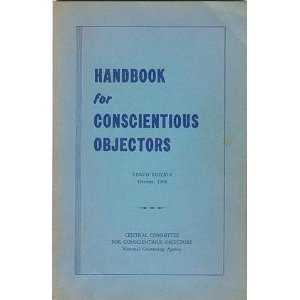
By April 10, my CO statement was ready. I argued that the basis of my claim was my belief that human beings were created in the image of God. I quoted both the Bible and the Koran and clearly stated my thesis: To kill a man is to kill God. I pointed out that my belief system held God and love as synonymous and concluded that to kill God is to also kill love.

My religious beliefs tell me that this is the greatest wrong a man
can do. God loves; he creates; and so it is for man born of Him,
born unto his likeness and oneness to so the same; to love and create
not to kill and destroy. To destroy by killing human life is not only
to perform the greatest wrong against man, it is to perform it against
life, and thus against God.*

On April 30, I flew home make my appearance. I had been in Texas 10 months. With a poor drug store photocopy of my C O statement, I took the Rapid Transit bus to North Hollywood and walked over to Colfax Avenue where Local Board # 82 stood like a sun-bleached, uninviting dental office. The Venetian blinds were ureic yellow. In front of me stood a young man already waiting at the counter. One of the secretaries, old enough to be my grandmother, was trying to contain her smile because the nineteen year old had placed a squeaking kitten on the counter and momentarily lost the handle. The ball of orange fluff scampered to the end of the countertop and I began secretly hoping he would relieve himself before being corralled. My fantasy was growing and I saw cat piss on the files, blurring the lottery numbers of all those who were scheduled to appear this day. No luck. My appearance was scheduled for 1:30. At 2:17, I was still sitting in the waiting area. I reviewed my carefully rehearsed responses to any question I might get. I knew that sometimes very unexpected questions could be hurled at very unsuspecting registrants. I also knew that there was one final question that I should ask when given the obligatory opportunity that signaled the end of the appearance: “Is there anything that I have said that makes you doubt my sincerity?” I was ready to rock and roll. Inside my head the last lines of a Phil Ochs tune played:
Call it "Peace" or call it "Treason,"
Call it "Love" or call it "Reason,"
But I ain't marchin' any more.
It was my own private pep rally. At 2:29 p.m. The door opened and I entered the tribunal.
The seating arrangement formed a square. The three board members, left center and right. To ease my growing tension I conjured up Alfalfa of the Little Rascals. I could hear him reciting the “Charge of the Light Brigade.” Only now it was “Selective Service to the Left of me, SS to the right of me…” The humor lasted an instant and the first board member, a thin, slightly gray, very bland man addressed the group. He may have introduced the other three men in the room but their names never stuck. A secretary was also present, sitting in a corner to my left. She took shorthand from the moment the first member spoke. I brought no witness.
Once the questions started, I hardly had time to breathe.
Why have you come before the board today? You say you’re against the Vietnam War, why didn’t you express that belief when you first registered? What religion are you? You know this classification is not granted to anyone, you have to be religious. I referred the members to my statement and letters of support. They were not moved by Kenneth Patchen’s poetry or the words of Dr. King or Gandhi. Not religious enough. When I told them I had recently received a degree in history in response to a question about my education, out came the heavy artillery.
The line of questioning that followed traced my beliefs to the popular culture of the age. The oldest board member, who I am sure was a retired officer, asked me how my beliefs would translate to other situations.
“What other situations,” I said, “I am against violence in any form and could not participate in any organization that used violence to pursue its objectives.”
“What about the Nazis, they were brutal killers who massacred Jews. Would you just stand by and let that happen?
There it was, the Nazi question. I was expecting the rape of my grandmother to come next.
“This is obviously a difficult question to answer, but for me I must tell you that my religious beliefs do not permit me to use violence.”
“So you’d sit there and let people be massacred?”
I referred to my statement and reminded the board that my beliefs did not permit met to use violence in any form. I repeated that there were non-violent alternatives to war.
“Does the same hold true for members of your own family when threatened by violence?” Would you just stand there and watch? You mean you’d do nothing if your own family were threatened by physical violence?
I held my ground. In my mind I knew I would do what I must. I also knew I would have none of this illegal, immoral war.
“So, Mr. Greene, it seems as if your beliefs will allow you to serve on a non-combatant basis? Wouldn’t you agree that your beliefs would allow you to serve as a medic?”
“Again, I must respectfully remind the board that my beliefs do not permit me to be part of any organization that advocated the use of violence. But I am willing to accept alternative service. In fact, that is one reason why I volunteered to serve my country in VISTA.”
A few short questions about my work in Vista followed, but it was clear that Local Board #82 wasn’t interested in my efforts to promote poetry or musical knowledge, or welfare rights in the Houston ghetto. If they read the entirety of my statement they would have read two of my poems dealing with conscientiousness. They would have also read an excerpt from a Kenneth Patchen poem I included.
There is only one truth in the world:
Until we learn to love our neighbor,
There will be no life for anyone.

The man who says, “I don’t believe in war
But after all somebody must protect us”
Is obviously a fool and a liar.
That who supports murder is a murderer?
That who destroys his fellow, destroys himself?

By the end of my appearance, I was certain that I had convinced no one. By using the Patchen quote I had essentially called them all fools and liars. I felt satisfied. In truth, Patchen, King and Gandhi were worthy of worship more than a God who sanctioned napalm, anti-personnel bombs, and Agent Orange.
The personal appearance gave me an opportunity to check in with a few friends I left behind. It also insured that I’d be able to complete my VISTA service because it would take anywhere from two to six months to receive the board’s decision, be reclassified to 1-A, take a physical, and then deal with the business of refusing induction.
Before returning to Houston I found time to see my friend Kenny. His daughter Alex had died two months earlier. I didn’t know that her one-year of life began and end on the same day.
“She died on her birthday,” Kenny said clearing a place to sit in my old bedroom. His face drained. He brushed his shoulder length hair aside. His voice was barely audible.
“We were on the way to the hospital and stopped at a gas station first. I knew she wasn’t going to make it; I think she might already have been gone. It was so strange not bringing her home with us.”
I felt like crying but held in everything to protect Kenny. We all knew that Alex, who had been born with a brain abnormality, was going to have an uphill struggle. Perhaps this was for the best. I didn’t even have time to see Carol, but he intimated that she wasn’t into visitors right now. I was concerned for their future together. We tried to talk about music and sports. It didn’t work. There would be no stopping by the Ash Grove, our favorite music venue. No late night drives through Laurel Canyon or trips to Westwood Village. No human be-ins, love-ins, or teach-ins. My life was no longer in Southern California. It was hovering, on hold, somewhere between Texas and Vietnam.
The spring of 1970 saw the Southeast Asian war widen to Cambodia. Not surprising, new outrage and demonstrations at home followed close behind. I had two months to finish my work in Texas and prepare to deal with the inevitable collision coming with my beliefs and the Selective Service System. If my government was dragging its heels on an exit strategy from Vietnam, my own plan for exiting the war at home took vivid shape. I would complete all work and current obligations by early May, travel the length of the country, and position myself for a final confrontation with Local Board #82. I considered myself a draft resistor not a dodger. The expression “draft dodger filled me with anger and contempt. I was avoiding nothing; I was facing the selective service system head on. Despite my fear of prison and the consequences for my family, my resolve was inviolable, my decision made. If saying to my government that I will not kill a human being became the defining moment of my life, I could live with that.

Tuesday, October 26, 2010

Chapter 7

Sweet Home Chicago
c2008 B. Greene

Aside from one personal appearance before my draft board, I made one other trip before returning to Houston to complete my year of service. Larry intended to go home for Christmas to Chicago. Kim would be there for a couple of weeks before traveling to New York to see her family, so I decided to head north. I needed to see if we had any future together. I also wanted to make sure that Kim knew I had no expectation that she would leave the country if need be. I’d been weighing the alternatives and was still unable to make a decision about going to Canada or going to prison. Going to Vietnam was no longer an option. My hope was that we could make a decision and take a stance. Suddenly the draft was complicating everything. I felt cornered. Part of me wanted to go to Canada and be done with the USA. Canadians seemed so sane; images of pristine mountains and rivers tumbled with cosmopolitan cityscapes in my head. I had recently obtained the Manual for Draft Age Immigrants and would read the chapters each night before sleep. I saw myself there, sometimes with Kim, sometimes alone. Each mental rehearsal of escaping to Canada left me torn. I could put an immediate end to all this shit, but then I’d be persona nongratta in my own country. I loved my country. That much I knew.
Another fantasy made occasional appearances in my mind. This one involved the totality of my life up until the moment the draft board would decide my fate. If they were not moved by my work in VISTA or my academic and spiritual influences, certainly my formative years must have some weight. I was the Boy Scout who made it all the way to the top of the mountain. An Eagle Scout at twelve, I could document my community service. I was the one with perfect attendance in school. I adored baseball and hot dogs and helped raise the flag in elementary school. I was a Knight, (men’s honor society) in high school, and senior class president. I won an Ephebian award for service and an American Legion scholarship. How could my integrity be questioned?
In order to take a leave, I was required to follow proper procedure. I needed to obtain official approval, fill out pages of government forms, secure some bureaucrat’s OK and sign a contract committing myself to finish my year of service. All this was to be done in Austin. Larry encouraged me further by offering to drive me to there that afternoon. Four hours later, with all tasks completed, Larry dropped me off at the airport in Austin. My Braniff Airlines flight would originate in Corpus Christi, make a stop in Houston, pick me up in Austin, and then go on to Kansas City and Wichita before arriving in Chicago by daybreak.
I had about 4 more hours to kill before my midnight departure time. I read, I watched others arrive and depart; I ate something, read some more, and thought about Chicago’s brutal winter weather. By 10:00pm the airport was empty. By 10:30, the custodial staff had vacuumed, and all sound, save the Musak disappeared. I was completely alone in the airport. The ticket clerks had vanished, there was hardly the security presence of today’s airports then; it was lovely albeit a bit daunting. By midnight, I saw and heard a plane land. As instructed, when it taxied up to within walking distance of the window near my seat, I walked out to the tarmac. From my left appeared a portable stairway rolling behind a small tractor. Securely in place, the door opened and the Braniff flight attendant, appearing more like a go-go dancer in her orange and fuchsia shorts, called my name. I sighed. I boarded. Within minutes I was part of the November sky, listening to Led Zeppelin on the preprogrammed stereo channel. The flight never could land in Kansas City because of a blizzard. As luck would have it, I was sitting next to an excited G I on leave from “Nam” and eager to see his family. I was only 22, but he seemed so young to me. I wanted to tell him about the November Moratorium or at least feel him out on his views about the war, but a skidding plane in a snowstorm is hardly the time. We made casual conversation about the storm and laughed together when a rattled businessman kept screaming “I have to be in Kansas City tomorrow morning at 9 a.m.” He smiled and exited coatless into the blowing snow in Wichita. Early the next morning, after circling O’Hare airport for 45 minutes, I landed in Chicago.
I have often thought of that evening in Austin’s airport. I felt like I had hitched a ride on a passing airplane back then. With all the changes in airport security since then, what are the chances of boarding a plane like that ever happening again?
I found Kim working as a social worker on the Southside in a neighborhood that rivaled the 5th Ward for danger. It was Blackstone Ranger territory. The notorious street gang made their presence felt daily. Turf wars, muggings and shootings, not to mention ice covered streets made the area extremely dangerous. But Kim took particular delight in helping her clients beat the system. I’d accompany her now and then to find an elderly person living in a small apartment with no heat, or surviving on cat food until the next small welfare benefit arrived. Eventually, the Chicago winter and the constant threat of being victimized took a toll. She wasn’t particularly happy there. Kim is a water person and everything was frozen. I knew if I spent a couple of weeks with her and constantly reminded her of the warmer Texas winter, the proximity to the Gulf coast, and the horses, she might consider returning to Houston. Not as a VISTA, however. That part of her life was over. But Kim still had many friends on the project and with the new year came another opportunity.

January 1970
The U.S. Census Bureau put out a call for census takers in Houston; that helped to seal the deal. The work was temporary but paid well. She knew the neighborhoods where undocumented workers were least likely to answer their doors. Her youth, energy, and charismatic personality would all contribute to her effectiveness. Besides, I could tag along now and then and use my Espanol if she ever got in a jam. Perhaps the local authorities could now tolerate her presence in poor communities working for this branch of the government rather than the Office of Economic Opportunity. Census workers never got questioned.


Chicago Blues:Playing harp on the Illinois Central Platform

The time in Chicago passed quickly. Fortunately, Larry’s friend Tony and his family took me in on Christmas day and my time alone in Chicago wasn’t too bad. I rode the El and the Illinois Central systems and thoroughly explored the city. Between the University of Chicago, the museums, and the blues scene, there was plenty to do. I even looked up Bruce Grossman, a friend from UCLA, who was doing substitute teaching there until his draft status was finalized. The thought of remaining and working as a sub seemed attractive until I began the process of application. I took some sort of placement test, and filled out a sheaf of forms. Getting to daily assignments during the Chicago winter would be daunting. I tried a few practice runs during my last few days there and it soon became apparent the combination of distance, weather, and dicey neighborhoods would take a stiff toll. I picked up my pace while walking through a particularly dangerous stretch and slipped on an icy street corner. The heels of my leather boots were like mossy rocks on those south Chicago streets. Slamming my elbow and butt simultaneously on the slick cement, I decided to rethink winter in Chicago.
By New Year’s Day, Kim had returned. When the temperature dipped to -14 a few days later, I knew it was time to return to Houston. I had never felt bone-chilling cold like that before. I put on nearly every shirt I had and we went for a walk down by Lake Michigan. Even with layers of shirts, a sweater, a scarf, and my heaviest jacket, the wind blew right through me. The day before I left, I went for a walk in the Hyde Park section near the University of Chicago. Head down, breath steaming in a whorl before me, I heard a voice from a side alley. Stopping to listen, I caught a glimpse of a panhandler.
“Hey buddy,” the weak voice called. “You gotta a dime or a quarter for some coffee?”
I took my ungloved hands from my jacket pockets and tried to pry them inside my front Levi pocket where I knew what little money remained was hiding. As I jerked my hand out to retrieve a quarter, it caught on two rumpled dollar bills also present. They tumbled to the ground and rested right in front of the beggar. Goal!! Game over. His eyes blazed with unexpected delight.
“Go on,” I said. Clutching tighter to the quarter, I turned around and walked back to Kim’s apartment. Dean Martin’s voice singing “Goin’ back to Houston” filled my head. I hated that song. Somehow it fit perfectly in the moment.
Chicago, in my view, has always been the quintessential city. My time there cemented that notion firmly in place.


With Kim near frozen Lake Michigan

We made a tentative plan for Kim to join me by March and shortly thereafter I headed back to O’Hare airport and the wait to fly standby. On the return flight I mulled over all the things I hoped to accomplish before my year was up. I wanted to leave the University of Thought a viable educational alternative. The Issue was growing in size and importance and I also wanted to make sure that my role as poetry editor continued. We were getting more letters from VISTAs all over the region who were questioning their motives and needed to talk about what kind of organizing might best serve their projects. I was anxious, too, to see Amber. Julie had tossed out the idea of breeding her and I certainly didn’t want to miss that. Returning to Houston was invigorating. Exiting the aircraft that afternoon, the temperature read 72 degrees. I unwrapped my scarf from around my neck and hurriedly took off my heavy winter coat. I never wore either again for the remainder of the year.
The remaining winter days were filled with teaching my class, getting out the latest version of The Issue, and offering assistance to other VISTAS throughout the city. Of course, there were other minor emergencies that erupted from time to time. I recall a phone message asking all VISTAS with government cars to meet in a parking lot near a grocery store. One of the local VISTAS was being seriously hassled by some folks who resented her presence and work with poor people. It was time for a show of support. Something we referred to as “a full scale poverty alert.” Our detractors seemed to lose their nerve with the presence of U.S. Government cars around. The theory was that if a whole shitload of those cars showed up all at once it served as a deterrent to potential aggressors. Somehow that “official use only” under the U.S. Government got people thinking in the direction of G-men? FBI? Some authority I never heard of? Before our colleague exited the grocery store we had assembled no less than 20 government vehicles around her car. The bullies got the message and took off through a rear exit. All further taunting ended that night.
Every now and then we’d take the mystique of the government car to another level. Texas had no shortage of car with Confederate flags, gun racks, or KKK stickers. If we happened to roll alongside one on the freeway, whoever was riding shotgun would slowly reach for the glove compartment while eyeing the occupants of the vehicle next to us. There, in each GSA car was a small black binder. Used primarily for receipts, it also contained information about servicing the car and some do’s and don’ts. We’d pretend to write in the black notebook while staring at the passengers in neighboring cars. Usually the brief sense of freight that resulted was enough to satisfy our abuse of power.
One evening in the midst of those busy days almost changed the course of everything. David asked me if I’d accompany him to a small club in downtown Houston to see a musician he’d recently met. He’d been taking some photographs at Herman Park and had a conversation with a woman called Sally who invited him to see her perform.
“She sings and plays piano at a small place a few nights a week,” he told me. “Let’s go down there and see one set, I think you’ll like her music.” Down there turned out to be skid row and the club looked more like a seedy dive, but the crowd was friendly and overflowing. At the far end of the bar sat a small piano. Before David’s friend was introduced, I noticed a heated discussion between two fairly inebriated guys on the other side of the room. Whatever their disagreement, it seemed to dissolve when the music started. No wonder, the main attraction was outstanding. Sally played a mix of standards and her own material with a silky, soulful mastery of the keyboard. The audience adored her. After two encores, David went to the rear of the club to say hello while I remained at our small table. A new Beatle album, Abbey Road, had just been released and when it came on during intermission I was captivated by the music and lyrics. Soon after “Here Comes The Sun,” David and I exited the still packed club and walked toward our GSA Dodge Dart parked about four blocks away. We crossed a fairly well lit street and then continued up a dark side street half a block where the car was parked. Out of the night a figure lurched forward from between two parked cars. Taking a stance about three feet in front of us and directly in our path he snarled, ”Aw right, what do you motherfuckers want?” Between my racing heartbeat and my eyes focused on an object he held in one hand, I could barely speak. David remained silent. What was he holding? It was too small to be a gun, yet its silver gleam in the moonlight was near blinding. A straight razor. He produced the blade and repeated the question. “What the fuck do you want with me?” In my mind, I instantly saw blood. Our blood, lots of it. But we were still uncut and maybe there was a way we could defuse this guy. Like Spanky and Alfalfa of the Little Rascals, we stammered and then blurted, “Us? We don’t want nothin’ from you. You must be looking for someone else.”
“So you ain’t mad no more?”
“Naw, we weren’t ever mad.”
Finally, it hit me. This was the guy that was arguing with someone before the music started. He obviously thinks I’m that guy. I realized his adversary had dark curly hair and a moustache like mine. If it was dark in that bar it was even darker where we now stood.
“I think you might have the wrong person,” I suggested. We don’t know you, and you don’t know us.” He looked quizzical, if not relieved.
“I think I might look like the guy you were talking with a while ago.”
Lowering the razor to his side he blurted, “All right pass on.”
David and I stole a glance at each other. Neither wanted to be first, but someone had to move. Heartbeats pounding, we slowly walked past this dangerous, drunken fool. He followed us for about 50 feet. When he saw the GSA car with the sign on the door “US Government, For Official Use Only,” he took off running.
David and I wanted to laugh, or congratulate each other for keeping our heads under pressure but we were still too scared to say much. All the way home we muttered nothing but inaudible phrases or lengthy exhales. By the next morning I was ready to joke about not going to downtown music clubs with him again. It took at least a month for me to get the sight of that chrome straight razor out of my head. That could have been one messy night; fortunately it remains only a passing memory.


No laughing matter

Saturday, October 23, 2010

Chapter 6


B. Greene
c2008


Chapter 6-Washington DC


War can only be understood and put an end to if you and all those who are concerned very deeply with the survival of man, feel that you are utterly responsible for killing others. What will make you change?
- J. Krishnamurti


November/December 1969

They knew they couldn’t stop us. Everyone on the project wanted to go to the November Moratorium. When we promised to return in within two weeks, the matter was closed. Our individual efforts in the war on poverty would have to wait. It became paramount to go to the nation’s capital and speak with body and mind. True, famous folks from entertainers to politicians would be there, but this was no rock concert, no block party. Moratorium meant halt, meant enough with a collective voice of half a million. We wanted to be part of the sound of that voice. The war dragged on despite Nixon’s “secret plan” to end it. By the time we figured out transportation and lodging, the American death toll topped 32,000. Nothing mattered more at the time.
Every time I looked over the maps, the result was always the same. Getting from Houston, Texas to Washington D.C. would involve Louisiana, Alabama, and Tennessee. Alabama, in particular gave me pause for concern. The Civil Rights marches in Selma and Birmingham were all too recent. White northerners passing through needed to be careful. Young white northerners, with long hair or out of state plates needed to be extra careful. Perhaps we’d be able to bypass Mississippi. The murdered civil rights workers in Philadelphia, Mississippi and countless other slain or missing people conjured up fear and suspicion. At least, I’d have the company of my housemates on this mission. David, Larry, and I rode with Pat McNieve, a VISTA originally from Kansas who had escaped the priesthood and seminary life just a few months earlier. Pat was an affable loner who we all wanted to get to know a little better. He was also a very funny man. The way he talked about his experiences in the seminary could fill a room with laughter in minutes. He’d imitate Italian or Irish priests with perfect accents.
“ Look at the papers, these fine young lads arrested for drug possession,” he’d say in a perfect Brogue. “And all of them Catholic lads…” Pat was part stand-up comic, part lost adolescent who entered VISTA in his late twenties to reclaim his life while being of service to others. His 1962 Dodge Polara, complete with a Kansas license plate, would serve us well. It provided a trace of anonymity through the Deep South.
Most of the trip to DC was uneventful. Interstates and gas stops, a comment now and then about what city we just passed or the climate of the region. The weather was mostly overcast or raining, the dark hours passed consumed by catnaps, long looks at cotton fields, farm towns, and rural railroad crossings. Then Pat produced a joint. His newfound freedom, like his experimentation with recreational drugs, was euphoric at times and he didn’t always think about the consequences. A discussion ensued about what might happen if we somehow got caught with marijuana. Pat’s naiveté had caught up with us. It would have been fine with me to just ditch any dope, but that proved too unpopular. Finally, consensus reached: let’s just smoke up everything we have now. (A VISTA tradition) Pat began to loosen up and started telling more stories and jokes about the seminary. Nothing seemed funny to me. He’d giggle over jokes I’d heard in the 7th grade.
“Hey did you ever hear the one about Pastor Fuzz?”
“Yeah Pat, that was like 15 years ago.”
“What about Johnny Fuckerfaster?”
“Just drive Pat. And hurry up with that joint, these state patrols have dogs that can smell anything.”
I assumed every car that passed us on the interstate could see the thickening cloud of smoke in our vehicle. My paranoia turned into a sense of the absurd by the time we reached the edge of Virginia. Pat’s car battery began overcharging wildly. The battery gauge seemed about to explode. Looking at the flailing needle nonplussed, he announced, “This is not a big deal, all I have to do is turn my lights on, watch what happens.” Sure enough the needle returned to “Normal.” “What’s so awful about driving with our lights on in the daytime?” he questioned. Normally nothing, but on this day that was not the case. Apparently a pro Vietnam War group had organized a counter rally for November 15. In an attempt to show support for their viewpoint, they instructed all those who supported the war to drive to Washington with their lights on. We had no choice. Maybe this would make traveling without police harassment possible after all.
With four in the car, we could change drivers every few hours and go straight through. Yet Pat insisted on doing most of the driving. Our destination was Gaithersburg, Maryland, a suburb on the outskirts of D.C. Pat knew a woman who lived and worked there who graciously allowed 12 people, mostly from the project, to squeeze into her small one bedroom apartment for three days.
Kim, no longer in VISTA, drove in with some friends from Chicago. When thousands of young people achieve critical mass in the nation’s capital, accommodations get crowded. About three carloads met at the apartment. David reunited with his girlfriend Nancy and quickly grabbed the bedroom with another couple. Another six people occupied the living room and small dining area. Kim and I shared a sleeping bag on the kitchen floor. Privacy demanded a price. Looking up from my bed on the linoleum, I noticed a large iron skillet sitting on a front burner. I quickly cleared the stove of anything that might fall and tried to take a nap. By Friday, November 14, everyone had settled in. After reading the local papers and walking around DC a bit, we decided to participate in a march taking place the evening before the big rally set for Saturday the 15th. This event was more to my liking because it involved walking past the White House en route to the Capital building. I wanted to play an active role, not watch a show and listen to speeches.

VISTA Nancy Hite at the DC Vietnam Moritorium
By late Friday afternoon, we headed to Arlington Cemetery where the march was to assemble. People poured in from coast to coast; a rainbow of license plates lined the city.
They had walked out of classrooms and work places. They had abandoned all obligations. College decals or parking stickers from San Diego to Boston, Florida to Oregon adorned buses, vans, new sedans and barely running clunkers. Being my first time in Washington, I opened my senses to take in everything from the crisp air, the deep reds and rusty gold of the autumn leaves to the striking architecture of the Washington Monument and the Lincoln Memorial. My field of vision looked like enormous post cards. Part of me felt like I was in Disneyland, the other part held contempt for the halls of power so close at hand. As always, the nagging contradiction of risking arrest to protest a government that was my employer irritated me as well. But there was another contradiction taking root too: the dichotomy between country and government.
“You can still love your country and hate your government,” the bespectacled twenty year-old wearing a monitor’s armband sternly told a flag waving contingent who began to congregate around the march’s starting point.
“How dare you question my patriotism,” his girlfriend offered. “These people over here,” she said pointing at us, “they are the true patriots, what makes you think they don’t love their country just as much as you do?”


Official VISTA ID; useful in case of arrest

The march was extremely well organized. Monitors wearing armbands that read NPAC (National Peace Action Coalition) funneled us into long lines behind a row of tables spread out over the rim of a meadow about the size of a football field. They handed us literature that clearly explained what we’d be doing and how we were to do it. The handouts noted that up to this moment in time, there had been just over 32,000 U.S. deaths in Vietnam. Each marcher would receive the name of a fallen soldier, and a candle.

We’d be marching across the Potomac River and through D.C. until we reached the steps of the Capital building. Once there we would see enormous black coffins placed on various steps to the building. We were instructed to remove the name we carried and place it into one of the coffins. Once that had been done, our role in the march would end. When I got up to the table, a friendly organizer asked me where I’d come from. I mentioned that I was originally from California, and she informed me that I’d be carrying the name of a Californian killed in Vietnam. She handed me a rectangular cardboard placard that was about eight inches wide and two feet long. Thick string had been tied to the card to hold it in place over my neck. In large, neatly printed black letters on one side of the white card the name GARY LYLE RICHARDSON was printed. I took a six-inch candle from her as well and then joined the main formation with my friends. We merged with 32,000 others and waited to begin the trek.
It takes a good while for thousands of folks to walk across D.C. When the cold rain began, keeping the candles lit became our chief concern. Many of the monitors had lighters and appeared out of the night to keep those candles burning. Finally someone handed me a paper cup with a hole in the bottom that provided just enough protection from the wind and rain to keep the candles burning. Nobody mentioned it, but I’m sure we all thought of the symbolism connected to those candles. They must remain lit at all cost. When the wind chill factor on the bridge over the Potomac kicked in, I was glad to be obsessed with keeping my candle glowing. It gave me something to focus on aside from warming my hands. By the time we approached Pennsylvania Avenue I noticed thousands of others lining the streets of DC. It soon became clear, when some folks joined a name carrier and marched alongside that these were relatives of the fallen soldiers. There were parents, siblings and aunts and uncles all along the way. At any time someone who knew the person behind the name could come out of the dark and join the march. It could be a girlfriend, a neighbor, or a member of the clergy. With every step came more searching faces. All along the route, people were monitoring the names, looking carefully, and checking again, and then, if the name they were hoping to see appeared, they’d tearfully join the march. It was as if the deceased had suddenly come back to life.
I kept thinking about Gary Richardson as I walked. I wondered if he were anything like my friend Bill Garcia? Two California boys, out of 32,000, who possibly had someone waiting in the frigid shadows of this night. Two guys who would never see their 21st birthday or marry, know fatherhood, or even see their families again. While some of the marchers were singing, most walked mutely, lost in thought. I conjured up that Life magazine cover of 100 and tried to imagine 32,000 graduation pictures in print. I thought about the Vietnamese people too. With the Tet offensive the previous year had come so many haunting images of death and destruction. I thought about the anti-personnel weapons in use with metal shavings taking out the eyes and organs of children and their grandparents. I heard my government’s continual denial. Vietnam changed how we conceptualized war; it revolutionized the role of the media and brought the daily reality into our living rooms. With each step of that pilgrimage, I rewound every image and diatribe I connected to Vietnam. I saw Walter Cronkite on the CBS Evening News. The fatherly “most trusted man in America” would reveal the statistics every Thursday evening. His familiar face superimposed over American, North Vietnamese, South Vietnamese, and Vietcong flags that detailed the weekly casualties in inanimate, obscene numbers. We called it the scoreboard.
Shortly before we reached the White House, the monitors informed us that we could briefly stop the moment we were in front of the gate. They encouraged us to make an abrupt right face and shout the name we carried as loud as we could. We all knew that President Nixon wasn’t home that night. He’d gone to Camp David, I think, to watch college football games and avoid the influx of his “fellow Americans.” The monitors reminded us that our pause had better be quick because anything out of the ordinary would result in one of the nearby guards arresting us post haste. My moment at the palace gate wasn’t wasted. I could see the white mansion in all it’s neatly trimmed detail far off in the distance. I could touch the iron bars of the front gate with ease. Uniformed security officers lined the entranceway, and I came face to face with one when I made my pivot. I didn’t want to screech my assigned name, yet I wanted to be loud. What if my emotions got the best of me and I cried or choke-up? The three names poured out of my well-chilled body with clarity and volume. I shouted: Gary… Lyle… Richardson. A few steps later, overcome with emotion, I took a deep breath and gathered myself for the final push: the Capital.


The White House that night


It’s difficult to see the U.S. Capital for the first time and not think of all the government textbooks you’ve ever seen. At least for me it is. The halls of democracy always seemed so pristine, so rational. I thought too, of my red, white, and blue education, my Eagle Scout badge, and how remote the mud and blood of Vietnam was from the spot where I now stood. The rain had finally abated and the glowing chalky walls of Washington were near blinding. But there was another light emanating from the area as my section of the march prepared for the final leg. Small twinkling lights seemed to be covering the Capital steps. Making my way forward, I noticed the first of many oversized black coffins. The big painted plywood boxes adorned the steps of this historic landmark. One by one, marchers removed their name signs and placed them in the coffins. When each one was filled, the top was lowered and an empty one soon took its place. The mystery of the twinkling lights revealed itself as well. People were placing their cupped lit candles on the closed coffin lids before disappearing into the blackness. I did the same. About 30 seconds later, I turned around and looked over my shoulder. Candle-lit coffins scattered in front of the capital, growing smaller with each step; I wanted to place that image in my mind forever. On the way back to our car I noticed one of the monitors taking off his armband. Before he could discard it, I asked if I could have it. I wanted a talisman. I wanted to remember this night always.


It was early the next morning before we got back to Gaithersburg. Thoroughly chilled, sleep came quickly. Kim and I chose to spend the next day together and forego the rally. The decision not to attend the Saturday rally was difficult but the right one. We each had to head back the next day; time to talk quietly and simply catch up on each other’s lives was at a premium. Some of the rally was televised so we were able to see much of the music and speeches. Dr. Benjamin Spock, on whose ideas our generation was raised, gave an impassioned plea to stop the war. Entertainers like Joan Baez and Ritchie Havens followed. Even some currently in Congress like Ted Kennedy gave carefully worded speeches. By late afternoon the media carried another story. As is often the case, a radical faction estimated at 2000 had broken off from the mass of marchers and a violent confrontation with police and National Guard troops reinforced by 9000 infantrymen brought in for the event followed. One of the second year VISTAS in charge of transportation home grew concerned and the call came to begin to round up everyone and figure out how we were going to get back to Houston. Pat planned to make a stop in Kansas on his way back so David, Larry and I took a ride with Eric, a second year VISTA and acting supervisor.. With Kim safely on her way back to Chicago, my attention turned to getting back to Houston in time for the first meeting of the next Rock and Blues class.
We made one sweep of the D.C. area to see if any VISTAS might be stranded. Dupont Circle was empty, save for the litter and lingering tear gas that hung like frost over the nation’s capital. My mood was solemn if not depressed. That evening we drove straight through to Atlanta. Except for an hour spent in traffic court in North Carolina, we made excellent time. I never realized that small town’s with speed traps would give violators the opportunity to settle up and move on within an hour. Eric, the driver, had some extra money from the project for emergencies. After he paid the fine, he mentioned that we were to rendezvous with another carload of VISTAS in Atlanta and
I would be flying back from there with two others to Houston. The logic being that the second term of the University of Thought needed to start on time and I would benefit from an extra day or two to prepare. I didn’t know it at the time but David and Larry decided to spend a couple of days in Atlanta and then to hitchhike back to Houston. I got worried when I hadn’t heard from them for a week. They finally called collect from Rayville, a town in northern Louisiana. Seems as if they’d been stuck there a good while until a trucker gave them a lift part ways. We had all seen the film Easy Rider a few weeks before and the ending would not leave me alone. People disappeared on country roads in northern Louisiana. By the time they stumbled in a few days later, everyone on the project was relieved to see them back in Houston.
That weekend and my participation in the placard carrying march remain as one of the most profound experiences of my life. I subsequently found out that approximately 46,000 people made that trek from Arlington to the Capital. It took 40 hours to carry those names past the White House and fill those coffins. Even President Nixon would concede that the 500,000 that rallied On November 15, 1969 impacted his decision not to use his “secret plan” to end the war. That hidden solution, it was later revealed turned out to be tactical nuclear weapons.


Lay down, lay down, lay it all down
Let your white birds smile up
At the ones who stand and frown
Lay down, lay down, lay it all down
Let your white birds smile up
At the ones who stand and frown.

We were so close, there was no room
We bled inside each other's wounds
We all had caught the same disease
And we all sang the songs of peace
Some came to sing, some came to pray
Some came to keep, the dark away

So raise the candles high
'Cause if you don't we could stay black against the sky, oh
Oh, raise them higher again
And if you do we could stay dry against the rain.
-MelanieSafka
“Lay Down (Candles in the Rain)”

Tuesday, October 19, 2010

Chapter 5

Chapter 5 Horses
c2008 B. Greene

I figured when I first set out for Texas that horses might be easier to come by. I was right. In Houston, it was not uncommon to see horse trailers in parking lots, at gas stations, or on occasion, right in front of your house. So it was that one afternoon when Julie and I volunteered to take everyone’s laundry down to the local washateria, we chanced to see a pair of Appaloosas in a trailer parked nearby. Since Alun, her boyfriend had departed for Wales, Julie and another VISTA, Nancy Hite had moved into 1506 Rosewood. Both were second year Vistas waiting for rooms in the newly opened Project House on Rosedale St. Nancy had spent a rough first year in the 6th Ward and after surviving an attempted rape decided to move to another area. She’d taken a liking to David and he was doing his best to make her feel comfortable.
With Kim gone, Julie and I commiserated and kept busy. She too loved horses and had extensive experience riding hunters and jumpers growing up in Virginia. After a back injury, her riding days were cut short and she hoped to one day just be able to ride for pleasure.
“I’ve always wanted to own a horse,” I said as we passed the two Appys in the trailer.
“You know,” she said, “It wouldn’t be all that difficult around here.”
The following week we were sitting at an auction entertaining the fantasy. When a timid gelding entered the ring and drew very little attention we decided to bid a hundred dollars. Ten minutes and two bids later he was ours. Fortunately Julie had done some research and knew there was a stable about 20 minutes out of town where we could board our new friend for a reasonable monthly fee. With six people now living at the Communications Center, lower rent made even this luxury possible. The problem was getting our bay gelding to the stables. Reading the puzzled look on our faces an older Black man in overalls approached and made an offer.
“For twenty dollars I’ll carry that horse anywhere within an hour of here.”
Just when I thought our problem had been solved, I realized this man didn’t have a horse trailer; he was intending to use an old pick-up with stakes. He’d purchased a horse himself at the auction and he proceeded to load both with ease. I was dumbfounded. My amazement turned to anxiety as we followed behind the truck on the freeway. The two horses were merely tied to one of the stakes and kept shifting their weight throughout the ride. The bed of the old pick-up bent like a rowboat on choppy water. On the ride over, Julie and I named our horse Albion, after Kenneth Patchen’s Journal of Albion Moonlight. It seemed an elegant name for a cheap horse just shipped in from the Texas panhandle. Within the hour Albion was in a pasture and we were on our way to Sears to buy grooming brushes, a hoof pick and a bridle. Getting a saddle would have to wait another month.
With Albion came a warm friendship with stables owner Willard Smith. An excellent horseman, Willard ran the operation with help from his wife and children. About 50 horses grazed in a wide expanse of scrub brush loosely called a pasture. Another 35 or so were boarded in stalls in both a main barn and some outside pens scrabbled together from plywood and sheet metal. Willard loved horses and sensed that we did too. While we never discussed politics, he knew by the government cars we drove that we were VISTAS.
Sensing that our love of horses was disproportionate to our income, Willard quietly helped us along. Once when Albion caught a bad cold he graciously helped us by providing antibiotics for no charge. There was Albion head down with streams of green snot streaming form his nose. Grabbing what appeared to be an oversize chrome hypodermic syringe and a needle about four inches long. Willard showed me how to inject a horse. I would hold Albion’s head while he would tap three times on the neck with his left hand. On the fourth tap, he’d throw the needle like a dart sticking it into the horse’s neck and then screw in the syringe. I assisted Willard as he went through the barn inoculating any horse that seemed to be experiencing similar symptoms. Afterwards, we shared a snort of whiskey.


As genuine a person as you'll ever meet.

Willard was always about finding good homes for horses. In the process he could introduce his own children to horsemanship and keep a few head for himself. Willard and Mrs. Smith were in their late 40s or early 50s. Their youngest son, about 11 or 12 was a special needs kid who also had his own horse, a huge gelded Palomino. The two were inseparable, but not in the usual way. The boy would grab a hold of the horse’s tail from directly behind and “water ski” as the horse pulled him along. This was all the more remarkable because, according to Willard, the animal had once been so wild he was considered unrideable. Willard also explained that horses have very little feeling in their manes or tails because they contain no nerve endings. What looked painful to the outsider was not.


He called it “water-skiing”

Having a horse to ride was a most welcome stress reliever. When things in the city got overwhelming or depressing, a couple of hours grooming and riding a horse seemed the perfect antidote. Albion, however, wasn’t always cooperative. Willard figured he’d been traumatized in his early years and the result was a most high-strung disposition. He seldom walked. His two gears were a brisk trot and a gallop. Proof of his mistreatment came in he form of a large scab right at the base of his tail. We realized that when he was brought in from Amarillo his rear end was flush against a rough wooden stake. The scab was the result of a raw patch of flesh that finally healed. Willard told me we’d have to get it off after a while because other horses would nip at him in the pasture and there would definitely be trouble. Horses kick and bite. It’s not uncommon for them to cause serious injury to one another or even take out an eye. About a month after Albion joined the herd his scab was beginning to peal off. It resembled an enormous bay colored potato chip ripe for the picking.
“We got to get it off him, and there’s only one way,” Willard announced late one afternoon. He instructed me to watch carefully because he wanted to make sure I learned the proper procedure. We lured Albion near with a bucket of feed and Willard told me to hold his head while he circled behind the unsuspecting horse. In much the same way one would lower a fly swatter over a perched fly, Willard moved one had near the scab. Before I could blink he grabbed that crusty flap of skin firmly and ripped it off!
“Run like hell,” he yelled. We both took off and Albion bucked and kicked, and snorted and bolted. Out of breath and numb from laughter, Willard offered me a snort of whiskey. That scab never bothered Albion again.
By late autumn, it was apparent that Albion was a head case. He never calmed down completely. When a few other VISTAS teamed up to buy horses that Willard recommended, (I’m sure he dropped the prices to make them affordable) it was possible to go riding with friends. Although I rode Albion frequently, he never seemed comfortable around other horses. Willard sensed this and called Julie aside one afternoon. He told her of a six-year-old mare soon to be up for sale. Amber was a barrel racing champ and owned by the soon to be ex-wife of a Houston cop.
“She just wants to get rid of the horse,” Willard said. “The mare was a gift from her husband and she wants to return everything and move on. I think I can get you a good deal.” I wasn’t sure what that meant, and I certainly couldn’t see how we could afford to upgrade. One look at Amber changed all that. She was a big buckskin quarter horse mare who moved with speed and agility. If Albion was a Model T, Amber was a Lamborghini. All buckskin horses have a black mane and black tails. This just enhanced her beauty. The price would be $500. Julie and I knew trading Albion and the cash was out of the question. Unless…unless…I sold my car. I had a ’59 VW bug sitting in my garage in L.A. I’d resisted all offers from my friends, but I didn’t know when or if I’d ever get back there. Somehow this seemed like a once in a lifetime opportunity. Cars would come and go; Amber would not. I sold my car within a week, and Amber was ours and soon joined the other grazers in Willard’s pasture.
Having a horse like Amber gave Julie and me opportunities to introduce neighborhood kids to the magic of riding a horse. One morning we placed our saddles on saw horses in the front yard for a little cleaning. As we worked the conditioners and soap deep into the leather, a gang of kids formed.
“Whatcha doin’?
“We’re workin’ on our saddles?”
“Them your saddles? You got horses too?”
“Yeah, you like horses? Ever ride a horse?”
“Naw. But I sure would like to. Hey Mista, can we ride your horses?”
Because she was well trained and fairly gentle, a little horseback riding field trip soon took shape.
I was trying to balance my own self-interest with my work in the Third ward, so bringing kids to the stables offered a solution. I could easily place two kids on the saddle in front of me and give them the thrill of a gallop. I wondered if Willard would ever say something because all the kids were Black. The borders of race were held firmly in place in Houston, but he never said a word. He never changed his attitude or his willingness to help or teach us about our horses. In his own way, he’d become an important part of the project. The horse always came first for Willard.

A beautiful buckskin mare

Despite Willard’s help, having a horse proved taxing to our limited income. There were grooming implements, feed supplements, hoof picks and other unforeseen expenses. It was not unlike having a child. When the Texas summer turned icy Julie began to worry about Amber’s health. She had long fantasized about breeding her and seemed to have turned her own maternal instincts toward our mare. We had recently bought a blanket and secured a stall for the winter months.
“Bruce, the weather report said it might get down below freezing tonight,” Julie said one early November evening. “Ill see if I can get out to the stables and put a blanket on Amber this afternoon when she comes in from the pasture. If I can’t, do you think you could get out there? I’ll call you later.”
“Sure, I’ll be home early afternoon, just try to call me before it gets dark.”
By sundown the sky looked like tarnished silver. We turned on every working gas heater we could find and wore layers for the first time. Since I hadn’t heard from Julie all day I assumed Amber had been blanketed. At ten o’clock the phone jerked me from premature sleep.
“Bruce,” Julie said near panic. “I never got to the stables; I must have fallen asleep. Can you get down there and put a blanket on Amber, it’s 30 degrees out there.”
I agreed and set out for the stables. What I neglected to tell Julie or anyone else for that matter was that I had broken my glasses. All I had was a pair of prescription sunglasses. Hoping to go unnoticed, I emerged looking more like John Lennon going to the beach than a concerned horse owner. I needed these glasses to drive. Fortunately the moonlight lasted and no officer from the Texas Department of Public Safety saw me behind the wheel. Amber was pleasantly surprised at my appearance and, as usual, very cooperative as I got the blanket firmly in place. The other horses seemed envious. When Julie asked me the next morning how everything went, I reported Amber’s cooperative disposition and how uncommonly dark the freezing night had been. It seems to me we never used that blanket much after that. Or maybe Julie made certain the task was completed well before sundown.
Throughout my time in Texas, being able to drive out to the stables, call Amber in with a bucket of “sweet feed,” and then saddle and bridle her up for a ride was a fantasy come true. Sometimes I’d ride in a section of the pasture near the highway and wave to the truckers beginning another 24 hour run. Sometimes it was children in the backseats of station wagons who enjoyed flashing their fingers in a peace sign oblivious to their parents. People don’t ignore someone on horseback, even in Texas. Just when I thought it couldn’t get better, one final horse dream came true.
In the spring of 1970, the Grand National Rodeo came to Houston. The Grand Marshall was Elvis Presley. This was a very big deal for Texans. The Rodeo was held in the enormous Astrodome and featured a parade down Main Street that culminated at the stadium. All Houstonians who owned horsed could ride in the parade. A city ordinance allowed horses within the confines of the city for a 24-hour period. In short, people could tie up their horses in front of their houses overnight. My childhood fantasy of riding down my street and dismounting in front of my own home was about to come true. At the allotted time we drove the ten miles out to the stable and brought in Amber and another horse. It took a few hours, but it was well worth the time. We made stops at a corner grocery store for cold drinks. We cleaned up an occasional load of manure, and finally we tied up our horses on the front porch railing. I awoke several times during the night to check on the horses. By the next morning, I found Amber standing quietly, but her companion, a gelding named Apple had managed to untie himself and was munching contentedly on a neighbor’s lawn. Fortunately he cooperated with my urging and no one was any the wiser. We did not ride in the rodeo parade. That was never our intention.
Before long, there were four horses owned by a variety of VISTA combinations. Julie still had aspirations to ride again and purchased a young gelding she named Braun. She felt he’d make an excellent jumper because of his size. The bay horse was aptly named and must have stood 16 hands easily. Except for one time when I agreed to sit on his back just to see if he was broken, I stayed away from Braun.

Julie and Braun
Amber was my baby and I fell deeply in love. On warm afternoons I’d sometimes sneak away just to spend a few minutes with her. She knew my car, and recognized my face. All I had to do is throw a few cups of “sweet feed” into a plastic bucket and shake the molasses laced mixture. The sound of the oats and grain quickly caught her attention. In she’d gambol eager to get her nose in the bucket. This was a game we played; a tradeoff we made. While Amber gobbled her snack, I’d slip the bridle over her head, clean her feet with a hoof pick and get ready to ride. Sometimes, I loved to just drape myself over her neck and look at the Texas horizon through her ears.

The soft fuzz reminded me of tiny wheat fields in the sun.